
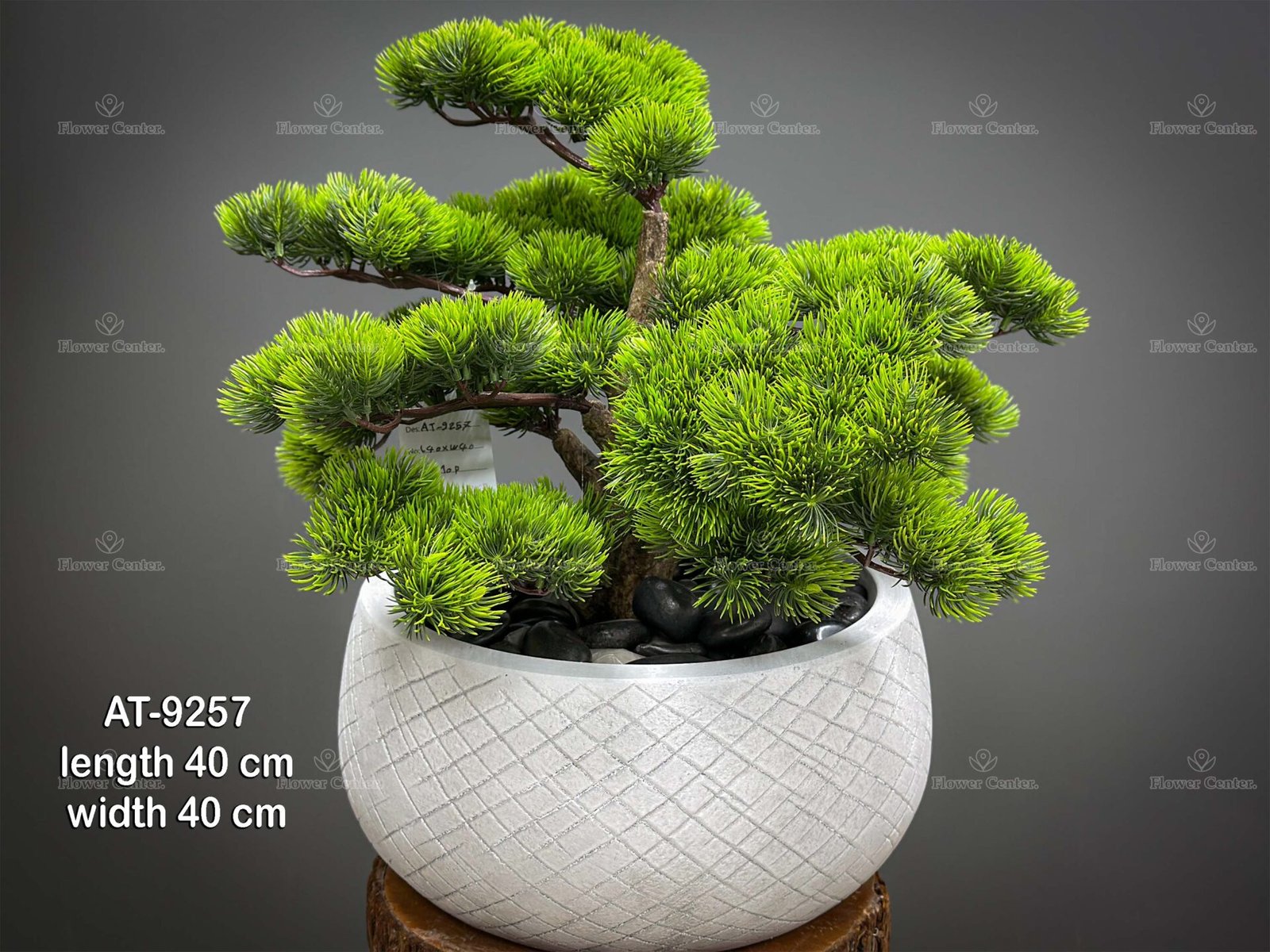
A large artificial tree in a living room is a design statement, not just a decoration. When chosen and positioned correctly, it transforms the energy of an entire room adding scale, organic warmth, and the sense that the space is genuinely lived in and thoughtfully designed. Here is how to get it right.
Choosing the Right Tree for Your Living Room
The choice of tree variety should harmonise with your existing interior aesthetic. Olive trees suit warm, Mediterranean-influenced interiors with natural materials, linen textiles, and warm-toned palettes. Fiddle leaf figs work best in contemporary, minimal interiors where their bold architectural leaves create strong contrast against white or grey backgrounds. Ficus trees bring a lush, traditional quality that suits both classic and transitional interior styles. Bamboo trees add an Asian-inspired elegance that works in interiors with clean lines and natural textures.
Scale and Proportion
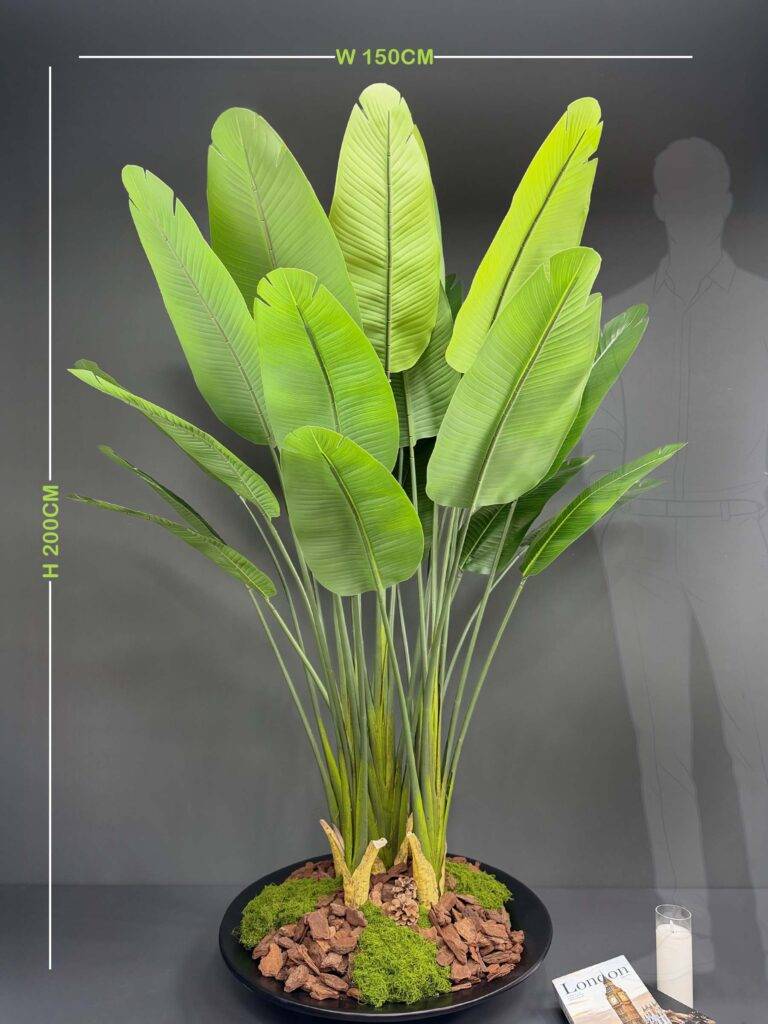
A living room tree should be tall enough to create vertical presence typically the same height as or slightly taller than the adjacent furniture. In rooms with standard 2.7m ceilings, a 180-200cm tree creates the right proportional relationship. In villas with double-height ceiling sections, 220-250cm trees are appropriate. Never choose a tree so large that it crowds the furniture arrangement it should breathe within the space.
The Right Corner for Maximum Impact
The classic position for a living room tree is in the corner behind or beside the sofa. This position grounds the seating area visually and creates a natural backdrop for photography and everyday living. Avoid placing trees in central positions where they interrupt traffic flow. A corner placement also conceals the planter partially, which benefits displays where the planter is functional rather than decorative.
Planter and Base Styling
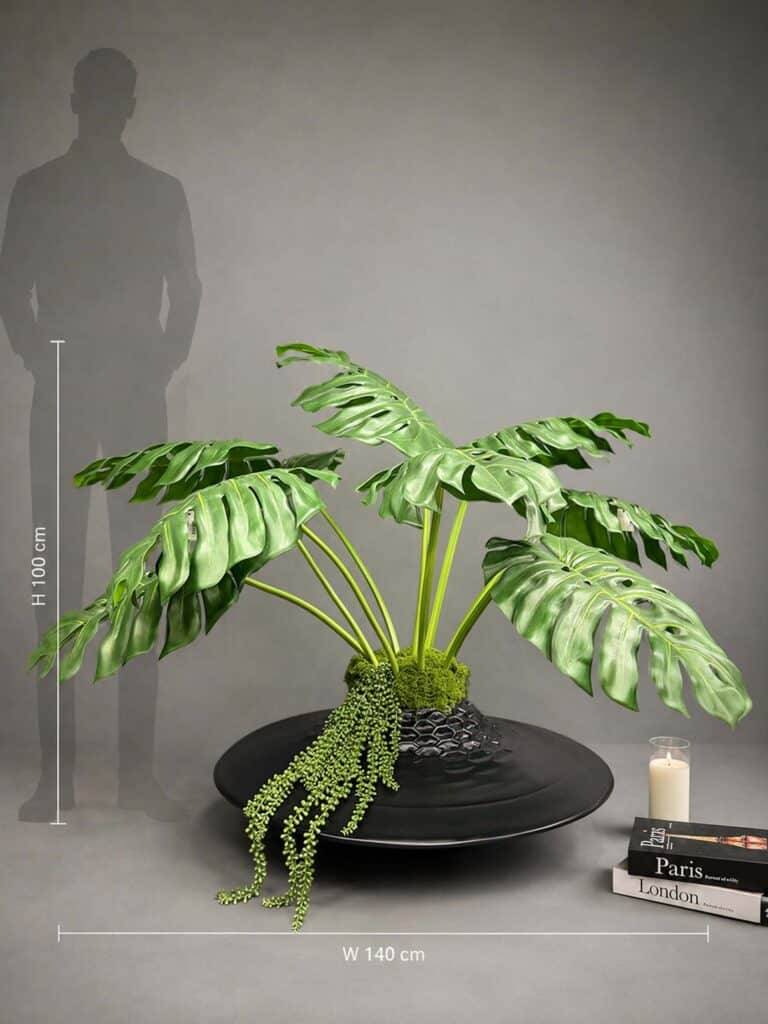
The planter transforms the tree from a standalone object into a designed composition. For contemporary interiors, large black or white ceramic planters, concrete vessels, or brushed metal planters work beautifully. For warmer, more organic interiors, terracotta, aged ceramic, or woven basket planters suit the overall aesthetic. Add decorative moss, stones, or pebbles to the soil surface to complete the realistic impression.
Layering with Smaller Plants
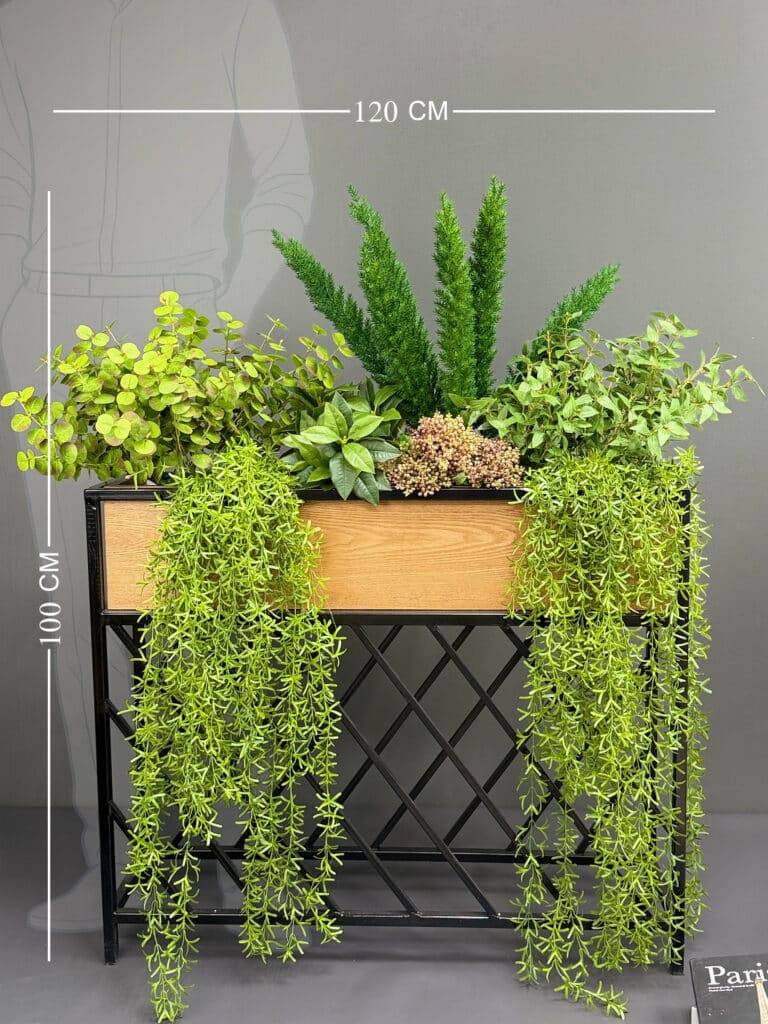
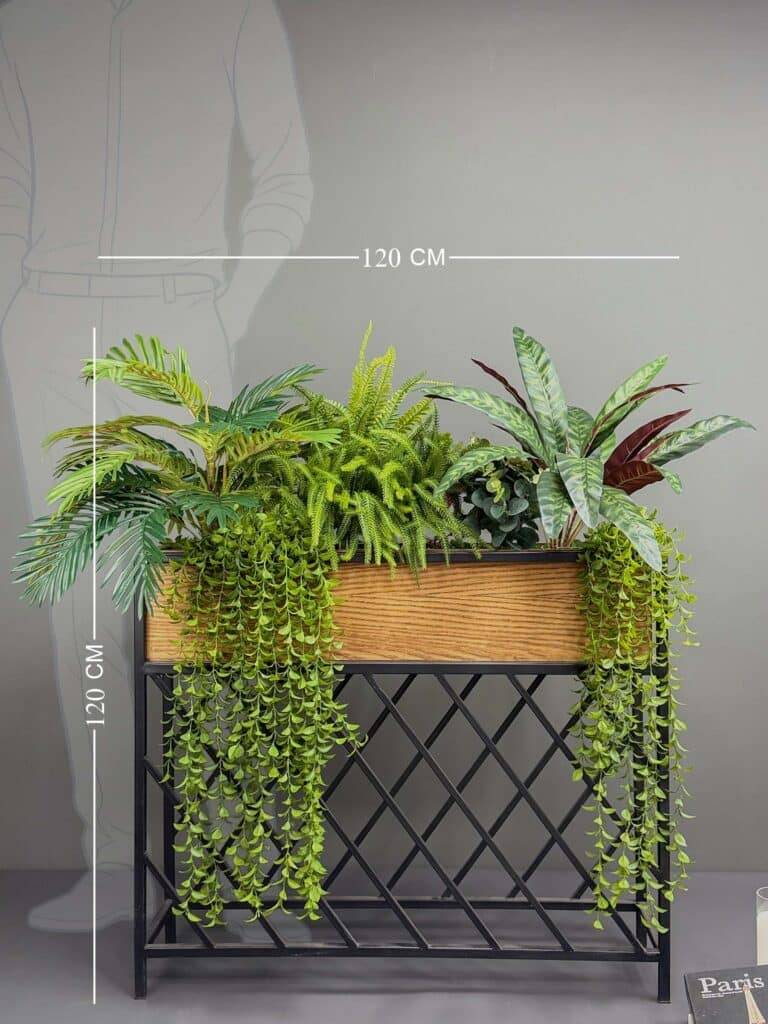
A large artificial tree creates the most impactful compositions when layered with smaller plants at different heights. A cluster of smaller potted plants succulents, trailing plants in smaller pots, or a structural snake plant arranged at the base of the larger tree creates a garden-like vignette with genuine interior design sophistication.
29. UV Resistant Green Walls for Outdoor